
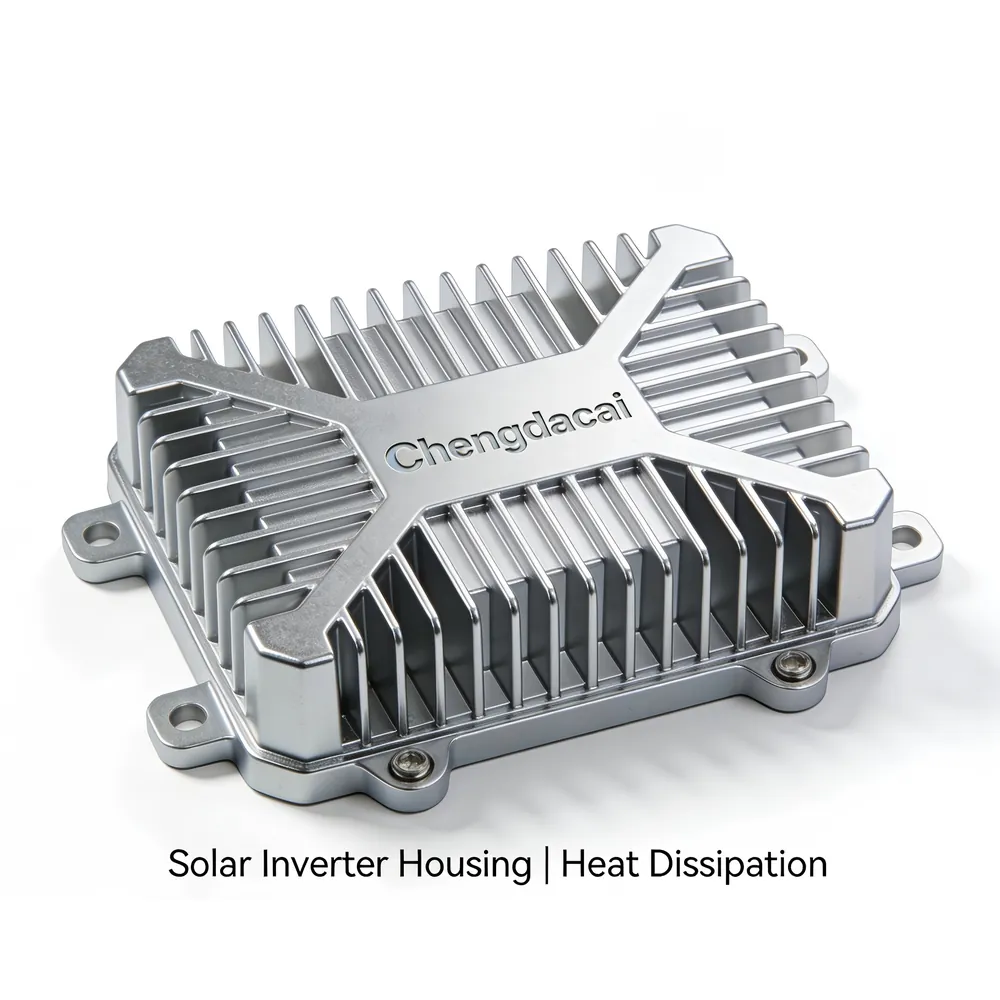
Up to the 800 t machine, which is roughly 8–10 kg of aluminum on a single-cavity die. A housing bigger than the platen is a different project: it would need a larger machine or a fabricated-and-cast hybrid, and that is a different quotation.
An outdoor inverter or battery cabinet sees daily thermal cycling, ultraviolet light, rain, dust, salt in coastal installations, and a heat source that runs whenever the sun does. The enclosure is not a box around the electronics; it is the environmental and thermal interface.
That duty cycle turns three casting features into lifetime decisions. The gasket land has to stay flat through thousands of cycles; the IGBT or inductor mounting pad has to stay flat enough for a thermal interface material to keep working; the coating has to survive the same twenty years without blistering or chalking.
The casting also has to be big enough to hold the electronics and small enough to fit the machine. The practical ceiling in this plant is an 800 t machine, which is where the size conversation starts.
- String and central inverters
- Battery chargers and DC-DC converters
- Power supply and UPS housings
- Battery module frames and end plates
- Outdoor energy cabinets and combiner boxes