
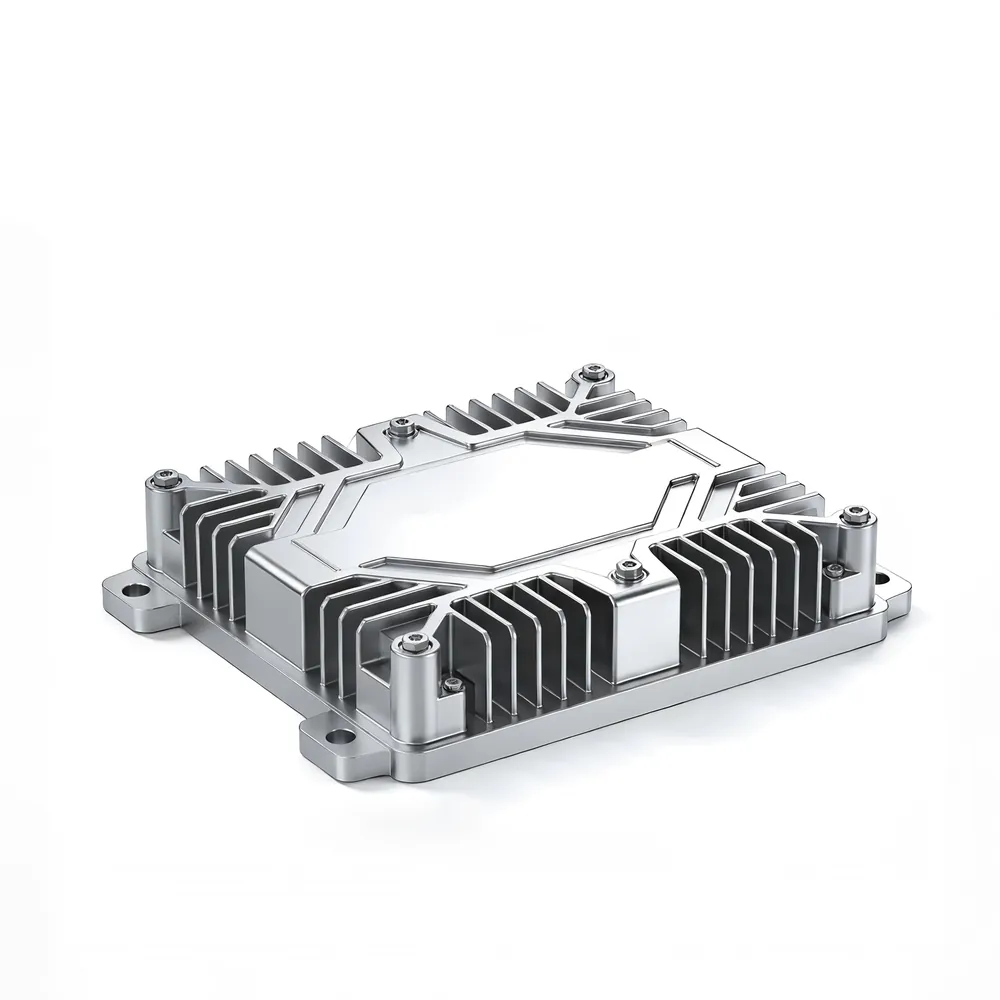
Material / Zinc Zamak 5 (ZnAl4Cu1)

Zamak 5 die casting: copper for strength, and what it costs

Zamak 5 is Zamak 3 with about 1% copper: stronger, harder, slightly less ductile and slightly harder to plate. It is the alloy for zinc parts that carry load or wear.

Zamak 5 Die Casting material review Zamak 5 Die Casting material review
0.7–1.1%
Copper, the difference from Zamak 3
≈ 328 MPa
Typical as-cast tensile strength
91 HB
Hardness, up from 82
≈ 7%
Elongation, down from 10–15%
01 / Why this alloy

What Zamak 5 is chosen for

Zamak 5 is the same zinc base as Zamak 3 with copper added at 0.7–1.1%. The copper raises tensile strength from about 280 to 328 MPa and hardness from 82 to 91 HB. Elongation falls from 10–15% to about 7%, which is still generous by aluminum standards. The grade comparison and the plating rules are collected on the Zamak die casting page.

The applications follow directly: gears, cams, lock components, threaded bosses, brackets and any small zinc part where wear or clamp load matters more than the last few percent of ductility. It also takes plating well, though the copper makes the deposit slightly harder and polishing slightly slower.

The same limits apply as for Zamak 3. Density is 6.6 g/cm³, creep starts around 60–80 °C under load, and the impurity limits on lead, cadmium and tin are just as strict.

  • Gears, cams and wear parts
  • Lock cylinders and latch components
  • Threaded bosses and clamping hardware
  • Brackets that carry sustained load
  • Zinc parts that must resist abrasion
02 / Composition

Typical composition and what the copper buys

Copper is the only meaningful difference from Zamak 3, and it changes strength, hardness and plating behavior together.

ElementTypical range, wt%What it controls
Al3.9–4.3Strength and fluidity
Cu0.7–1.1Strength, hardness and wear resistance; lowers ductility
Mg0.03–0.06Grain refinement and creep resistance
Fe≤ 0.035Hard spots and plating quality
Pb≤ 0.004Intergranular corrosion; strictly controlled
Cd≤ 0.003Same mechanism as lead
Sn≤ 0.001Same mechanism, active at very low levels
ZnbalanceThe matrix
Because the copper range is narrow, Zamak 5 is less tolerant of remelt variability than Zamak 3. The spectrometer check on each heat is what keeps the strength claim honest.
03 / Properties

Zamak 5 mechanical properties, as cast

The mechanical and physical properties of Zamak 5 in one table, with how the drawing uses each value. The strength gain over Zamak 3 is real and comes with a ductility cost that matters in impact cases.

PropertyTypical valueHow the drawing uses it
Ultimate tensile strength≈ 328 MPaGear teeth, brackets, clamped joints
Yield strength, 0.2%≈ 228 MPaPreload and thread engagement
Elongation≈ 7%Impact cases; lower than Zamak 3
Hardness≈ 91 HBWear at sliding faces and gear flanks
Density6.6 g/cm³Part weight
Thermal conductivity≈ 109 W/m·KHeat spreading in small fittings
Melting range≈ 390 °CLow melt temperature, long die life
Creep limit≈ 60–80 °C under loadThe same temperature ceiling as Zamak 3
The 7% elongation is still more than most aluminum die casting alloys offer. The practical difference between Zamak 3 and 5 shows up in a drop test or a gear tooth bending case, not in a tensile test.
Value aboveBasisWhat to write on the drawing
Alloy designationZnAl4Cu1 to ISO 301; Zamak 5 is the trade name, EN 1774 uses the same composition"Zinc alloy ZnAl4Cu1 (Zamak 5), die cast, as cast"
Tensile, yield, elongationSeparately cast test bar, as-cast condition, room temperature"UTS 300 MPa min, Rp0.2 210 MPa min, A 5% min"
HardnessBrinell on the casting, not on a polished test coupon"85–95 HB" only where wear or thread strength needs it
Density and shrinkage6.6 g/cm³; 0.4–0.6% linearUsed for part weight and for tool dimensions, not usually written
Section thicknessValues above are for 1.5–4 mm sectionsAbove about 6 mm expect lower elongation and more porosity
The numbers are typical for the alloy, not a guarantee for any geometry. A thick boss or a slow-filling corner tests below the table, which is why the drawing names the alloy and the acceptance level while the DFM review sets the section thickness.
04 / Casting behavior

How Zamak 5 behaves inside the die

Fluidity and thin walls

Zamak 5 fills almost as well as Zamak 3: 0.6–0.8 mm walls on small parts, multi-cavity dies at high cycle rates, die temperatures 150–200 °C. The copper slightly narrows the fluid window, so the melt temperature is run a little higher.

On a 16-cavity die the difference is measurable in scrap: Zamak 5 shows short fills in the last cavity a few degrees of melt temperature sooner than Zamak 3.

Shrinkage and wear

Shrinkage is 0.4–0.6%, the same family as Zamak 3. The copper-bearing matrix wears better, which is why gears and cams are quoted in Zamak 5 rather than 3.

Gear tooth design still follows the same rules: root fillet, pressure angle, and a die that fills the tooth from the root upwards. The alloy raises the wear margin; it does not replace the geometry.

Porosity and plating

Zinc casts with low gas porosity, but Zamak 5's higher copper makes the plating deposit slightly harder and more sensitive to surface preparation. Polishing time is longer and the surface quality before plating matters more.

Blisters trace back to gas entrapment or lubricant, not to the copper. The countermeasures are the same as for Zamak 3: polished cavities, controlled lubricant, gate away from the visible face.

05 / Machining and finishing

Machining, finishing and assembly notes

Machining

Zamak 5 machines almost as easily as Zamak 3: high speed, dry or minimum lubrication, short chips. The higher hardness gives a slightly better surface on turned and milled faces.

Threads are the common machining feature on this alloy. Because the material is strong and ductile, formed threads hold well, and the 1.5× diameter engagement rule can be relaxed slightly where the boss is properly designed.

Plating and coating

Copper–nickel–chrome plating works, and the copper in the alloy does not prevent it. What changes is polishing time and the sensitivity of the surface to scratches before plating.

Powder coating needs a primer on zinc. Where the part is both plated and painted, the order and the masking plan are agreed with the finisher before the first lot.

Assembly and inserts

Zamak 5 is a good host for self-tapping screws, cast-in inserts and machined threads. The strength margin over Zamak 3 shows up in torque-to-failure tests on small bosses.

Soldering works; welding is unusual in production. Mechanical fastening remains the default for a zinc assembly.

06 / Alternatives

Where Zamak 5 sits against the other alloys

If a zinc part wears or carries load, Zamak 5 is the default. If it must bend, Zamak 3 is better.

AlloyTensile, typicalElongationPick it when
Zamak 3≈ 280 MPa10–15%Best plating, best thin-wall fill, impact tolerance
A380 aluminum≈ 324 MPa≈ 3.5%Weight or temperature rules out zinc
ADC12 aluminum≈ 310 MPa1–3%Thin aluminum walls, Japanese drawing
The strength difference between Zamak 3 and 5 is about 17%, and the ductility difference is roughly half. Choose on which of those two the failure mode depends.
07 / Inspection

What is checked on a Zamak 5 part

CharacteristicMethodFrequency
Chemistry, copper and impuritiesSpectrometer on the meltEvery heat
DimensionsCMM or gaugesFirst article, then per-lot sample
Gear or wear-feature geometryProfile projector or CMMPer lot on wear features
Plating adhesion and thicknessCoupon test, X-ray fluorescencePer plating lot
Threads and insertsGo/no-go gauge, torque test100% gauge, sample torque
Casting soundnessVisual, sectioning where specifiedFirst article and periodic
On a wear part, the geometry check is the one that matters: a gear tooth that is 0.05 mm out of profile will wear out before the alloy does.
08 / Typical parts

Three parts where Zamak 5 is the right call

A small gear or cam is the clearest case: the copper-bearing zinc gives the wear margin, the alloy fills the tooth detail, and the low melting point keeps die life long. The geometry still has to be right; the alloy only buys margin.

A lock component with a threaded boss uses the strength and the thread-forming behavior together. Zamak 5 holds torque better than Zamak 3 at the same boss size, which is often what decides the alloy on a small part.

A load-bearing bracket in a decorative assembly uses Zamak 5 where Zamak 3 would creep or bend. The design still keeps the part away from heat, because the creep limit does not improve with copper.

  • Gears, cams and wear components
  • Lock cylinders and latch hardware
  • Brackets with sustained clamp load
Buyer questions

Zamak 5 questions that change the quotation

Strength, plating, temperature and the choice against Zamak 3 are the four answers you will be asked for first.

As cast, about 328 MPa ultimate tensile strength, 228 MPa yield at 0.2%, 7% elongation, 91 HB hardness and 6.6 g/cm³ density. Melting range is about 390 °C and linear shrinkage 0.4–0.6%. Those values apply to 1.5–4 mm sections; a thick section tests lower, especially on elongation.

When the part carries sustained load, wears against another surface, or needs higher torque on a small thread. Zamak 5 gives about 17% more tensile strength and 11% more hardness. When the part must absorb impact or needs the best plating, Zamak 3 is the better choice.

It makes polishing slower and the deposit slightly harder, but copper–nickel–chrome plating still works well. The casting surface and the preparation matter far more than the copper content.

The same as Zamak 3: about 60–80 °C under load before creep becomes permanent. Copper raises strength at room temperature; it does not raise the creep limit. A hot application is an aluminum application.

Close. It cuts fast, dry or with minimum lubrication, with short chips and a good finish. Tool life is long, and the higher hardness gives a slightly better surface than Zamak 3 on turned faces.

Yes, and it is the usual zinc choice for small gears and cams. The wear resistance is better than Zamak 3, and the alloy fills tooth detail well. Tooth geometry, backlash and lubrication still decide the life.

Related pages

Where this page connects.

Material, process and RFQ pages around the same decision.

Send the drawing. Get the engineering questions first.

Include the material, annual quantity, finishing requirement, target market and delivery date. The review can start from STEP, IGS, DWG, DXF, PDF or ZIP files.

Start an RFQ
Upload drawing