
Process / Comparison

Die casting vs sand casting: which process fits your volume and tolerance

Sand casting absorbs low volume, large parts and cheap tooling. High-pressure die casting pays for its tool with cycle time, tolerance and surface finish. The crossover is volume, not preference.

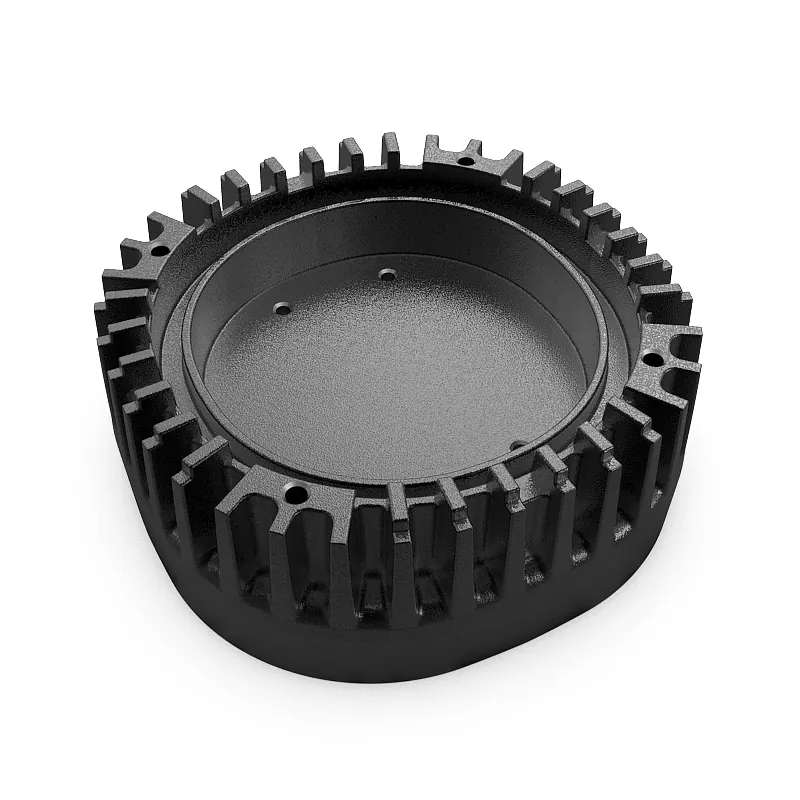
Complex die cast aluminum part with cored passages Process selection
Die casting
2,000+ pcs/yr
Sand casting
1–500 pcs/yr
As-cast
±0.05 mm
Die build
15–25 days

In one sentence

Choose by volume and tolerance: sand casting for a few hundred pieces, large parts or ferrous alloys; high-pressure die casting once the annual volume can carry a steel die and the drawing needs ±0.05 mm with a thin wall.

01 / The short answer

Which process fits, in one sentence?

Under a few hundred pieces a year, above roughly 20 kg per part, with internal cavities that need cores, or in a ferrous alloy: sand casting. From about 2,000 pieces a year with a wall under 2 mm, a ±0.05 mm as-cast tolerance and a painted or anodized finish: high-pressure die casting.

Between those two points the answer depends on the part. The comparison below uses typical values; the drawing and the annual volume still decide.

02 / Side by side

How do the two processes compare?

Typical ranges for aluminum parts of comparable size. Confirm each row against the drawing before choosing.

PropertyHigh-pressure die castingSand casting
ToolingSteel die, high cost, 15–25 days typicalPattern and boxes, low cost, 2–6 weeks
Economic volumeAbout 2,000 to 1,000,000+ per yearAbout 1 to 500 per year
As-cast tolerance±0.05 mm typical; ±0.01 mm machinedISO 8062 CT8–CT12, roughly ±0.5–1.5 mm
Surface finishRa 1.6–3.2 µm, paintable as castRa 12–25 µm, usually machined or coated
Minimum wall1.0–1.5 mm aluminum, 0.6–1.2 mm zinc3–5 mm
Draft1–3°, 0.5° minimum on deep walls1–2°
PorosityGas porosity, managed by overflow design and vacuumShrinkage porosity, managed by risers and feeders
Machining allowance0.3–0.5 mm per surface3–6 mm per surface
Cycle time30–120 seconds per shotMinutes to hours per mold
AlloysAluminum, zinc, magnesium; not ferrousAluminum, iron, steel, bronze
03 / Sand wins

When does sand casting win?

  • Low volume. A pattern that costs a fraction of a steel die makes 50 or 200 pieces economic; a die at that volume cannot amortise.
  • Large parts. Above roughly 20 kg, or beyond the platens of a 800 T machine, sand is often the only practical route.
  • Internal cavities. Sand cores can form passages that would need expensive slides or lost cores in a die.
  • Ferrous alloys. Iron and steel are not die cast, so the choice is made for you.
  • Prototypes and bridge tooling. A pattern can be changed cheaply while the design is still moving.
04 / Die casting wins

When does die casting win?

  • Volume. From about 2,000 pieces a year the die cost per part falls quickly, and a multi-cavity tool lowers it further.
  • Tolerance and repeatability. ±0.05 mm as cast, ±0.01 mm machined, part to part, lot to lot.
  • Thin walls and light parts. 1.0–1.5 mm aluminum walls remove weight that sand cannot match.
  • Surface finish. A die-cast surface can be powder coated or anodized with little preparation.
  • Integrated features. Bosses, ribs, mounting holes and lettering come out of the die, reducing assembly and machining.
05 / Moving a part

What changes if a part moves from sand to die casting?

A sand casting is not simply poured into a die. The geometry changes, and the earlier the change is made the cheaper it is.

  • Wall thickness drops but must become uniform; isolated thick sections create shrinkage porosity.
  • Draft increases to 1–3°, and radii replace sharp internal corners.
  • Ejector pin marks appear on the moving half and must be placed on a non-cosmetic face.
  • Undercuts need slides, which add tool cost and maintenance, or a design change.
  • Machining stock falls from 3–6 mm to 0.3–0.5 mm, which usually shortens the machining cycle.
  • Porosity specification changes from shrinkage to gas porosity; leak-tight parts need a pressure-tightness check.

Tool build is typically 15–25 days and T1 samples follow 3–5 days after tryout.

06 / Next step

What should I send for a process recommendation?

Send the drawing, the annual volume, the alloy, the tolerance on the critical features, the finishing requirement and the destination. A DFM review can then say which process the volume supports and what would change in the geometry.

We run high-pressure die casting in aluminum and zinc on 20+ machines from 160 to 800 T across the partner network. We do not run a sand foundry, so when sand casting is the better route for your volume we will say so rather than quote a die that cannot pay back.

Send the drawing and the reply comes back with the process recommendation and the questions that decide it.

Buyer questions

Process questions buyers ask before choosing

The process decision is a volume and tolerance decision.

Rarely. The die cost per part is too high unless the tool already exists, is shared with another part, or the tolerance saves enough machining to pay the difference. At that volume sand casting or machining from billet is usually the cheaper route.

The die casting piece price is usually lower, but compare landed cost: sand casting may need more machining stock removed and more inspection. The honest comparison includes tooling amortisation, machining and scrap.

No. We run high-pressure die casting in aluminum and zinc on 160–800 T machines. If sand casting fits your volume better, we will say so and you keep the drawing for a foundry that does.

Related pages

Continue through the project path.

Process choice feeds the cost model and the DFM review.

Send the drawing. Get the engineering questions first.

Include the material, annual quantity, finishing requirement, destination country and delivery date. The review can start from STEP, IGS, DWG, DXF, PDF or ZIP files.

Request a quote
Upload drawing