
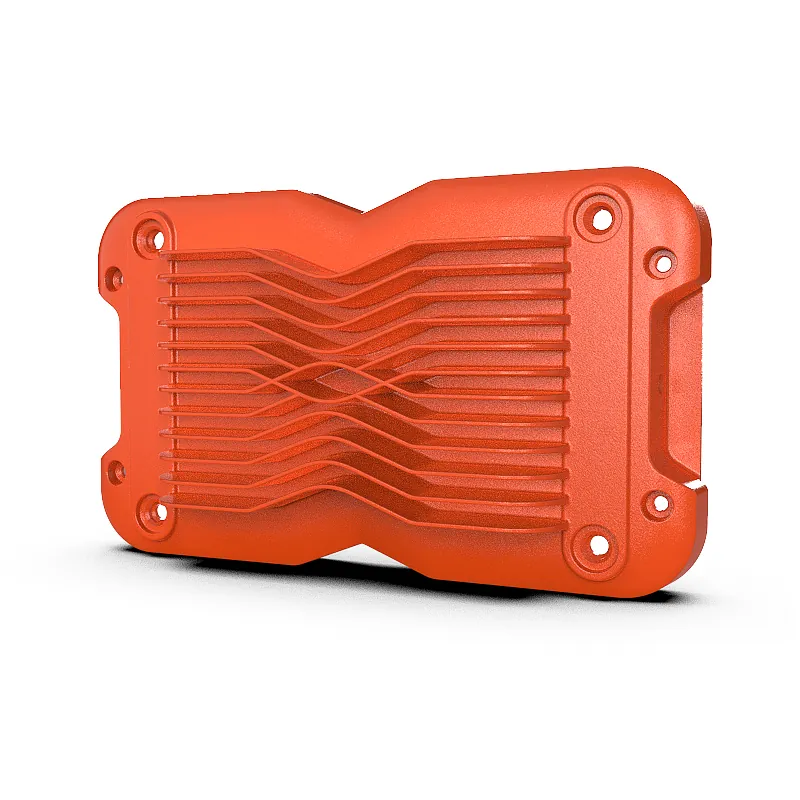
Resources / CNC Machining After Die Casting Datum Strategy

CNC Machining After Die Casting Datum Strategy

How datum strategy, machining allowance and fixturing affect bore position, flatness and sealing faces on machined die castings.

CNC datum strategy review CNC datum strategy review
Audience
Buyers and engineers
Focus
Practical decisions
Next
DFM review
Output
Actionable checklist
01 / Guide

Why datum strategy matters

A die casting is a near-net shape, not a precision blank. Machining creates the final interfaces, so the relationship between the casting datum and the machining datum decides whether bores, faces and sealing surfaces stay consistent.

When the datum chain is unclear, the same part can measure differently depending on how it is clamped. That shows up as position variation and assembly problems in production.

  • Machining creates the final interfaces
  • Datum chain controls position
  • Unclear datums create variation
  • Agree the chain before tooling
02 / Guide

Casting datums versus machining datums

Casting datums are features formed by the die, such as a boss pattern or a defined face. Machining datums are features created by the cutting process, such as a faced surface or a finished bore.

The practical approach is to define a stable casting reference, then create a machined datum from it in the first operation, and use that machined datum for subsequent operations and inspection.

  • Define a stable casting reference
  • Create a machined datum early
  • Use one datum for later operations
  • Keep inspection on the same chain
03 / Guide

Allowance and stock planning

Machining allowance must cover casting variation, distortion and any surface layer that has to be removed. A typical starting range is 0.3–0.8 mm on machined faces, confirmed against the drawing and process.

Local stock should also be planned for features such as sealing grooves, bearing bores and flatness-critical faces, where removing too little or too much stock creates its own problem.

  • Plan 0.3–0.8 mm typical stock
  • Cover casting variation and distortion
  • Review sealing faces and bores separately
  • Confirm values during DFM
04 / Guide

Inspection after machining

Inspection should mirror the datum strategy. If the part is machined from a datum but inspected from a different reference, the results are difficult to compare with the drawing requirement.

Dimensional reports, CMM results and functional checks should be recorded against the drawing revision and the lot, as agreed in the inspection plan.

  • Inspect from the machining datum
  • Record results by lot
  • Compare against the drawing revision
  • Agree criteria before production
Buyer questions

Questions to resolve before production.

These answers define the normal project path and the information needed for a useful quotation.

Provide the controlled 2D/3D drawing, material requirement, annual quantity, finishing requirement, critical dimensions, target market and delivery date.

An initial feasibility discussion is possible, but the quotation and tooling scope should be based on a controlled drawing revision.

Tolerance and inspection requirements are defined from the drawing, critical features, process capability and agreed datum strategy.

Ownership, storage, maintenance and transfer terms are defined in the quotation or supply agreement before the tooling project starts.

Related pages

Continue through the project path.

Use the internal links to connect the material, process, industry, product and RFQ pages around one project decision.

Send the drawing. Get the engineering questions first.

Include the material, annual quantity, finishing requirement, target market and delivery date. The review can start from STEP, IGS, DWG, DXF, PDF or ZIP files.

Start an RFQ
Upload drawing